🌸Welcome to Sakura Saku Japanese Lesson!🌸
I’m Asami. This blog is for English speakers who want to learn Japanese easily.
You can find simple lessons, tips, and summaries of my Twitch streams here.
Whether you’re a beginner or just practicing, this blog will help you enjoy learning Japanese.
The main theme of this lesson is learning how to read and write たちつてと.
👉 This is Part 1.
You can read Part 2 (writing practice) here.
📗 Let’s review あいうえお
Before practicing Ta-gyo, let’s quickly review the Japanese vowels.
The five vowels あ・い・う・え・お are the foundation of Japanese pronunciation.
Knowing these sounds will make it easier to read the Ta-gyo characters.
(If you’d like to review earlier lessons, please check the previous blog posts.)
📘 What is a “gyo” in Japanese?
In Japanese, hiragana are often grouped into rows called “gyo”.
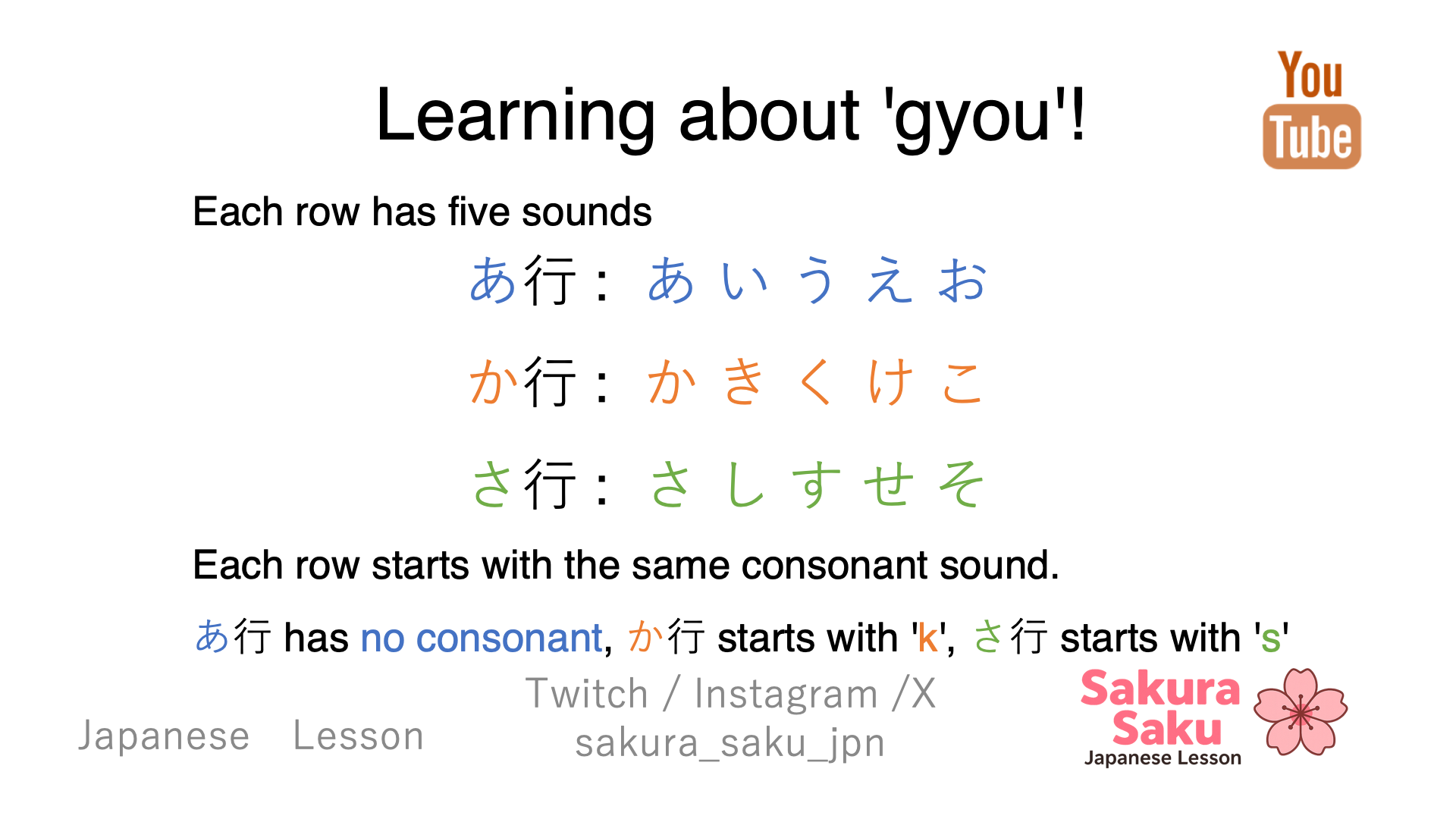
Each row shares the same consonant sound combined with the five vowels.
For example, Ta-gyo uses the consonant t with あ・い・う・え・お.
🗣️ How to Read たちつてと
Now, let’s learn the next group of hiragana: たちつてと.
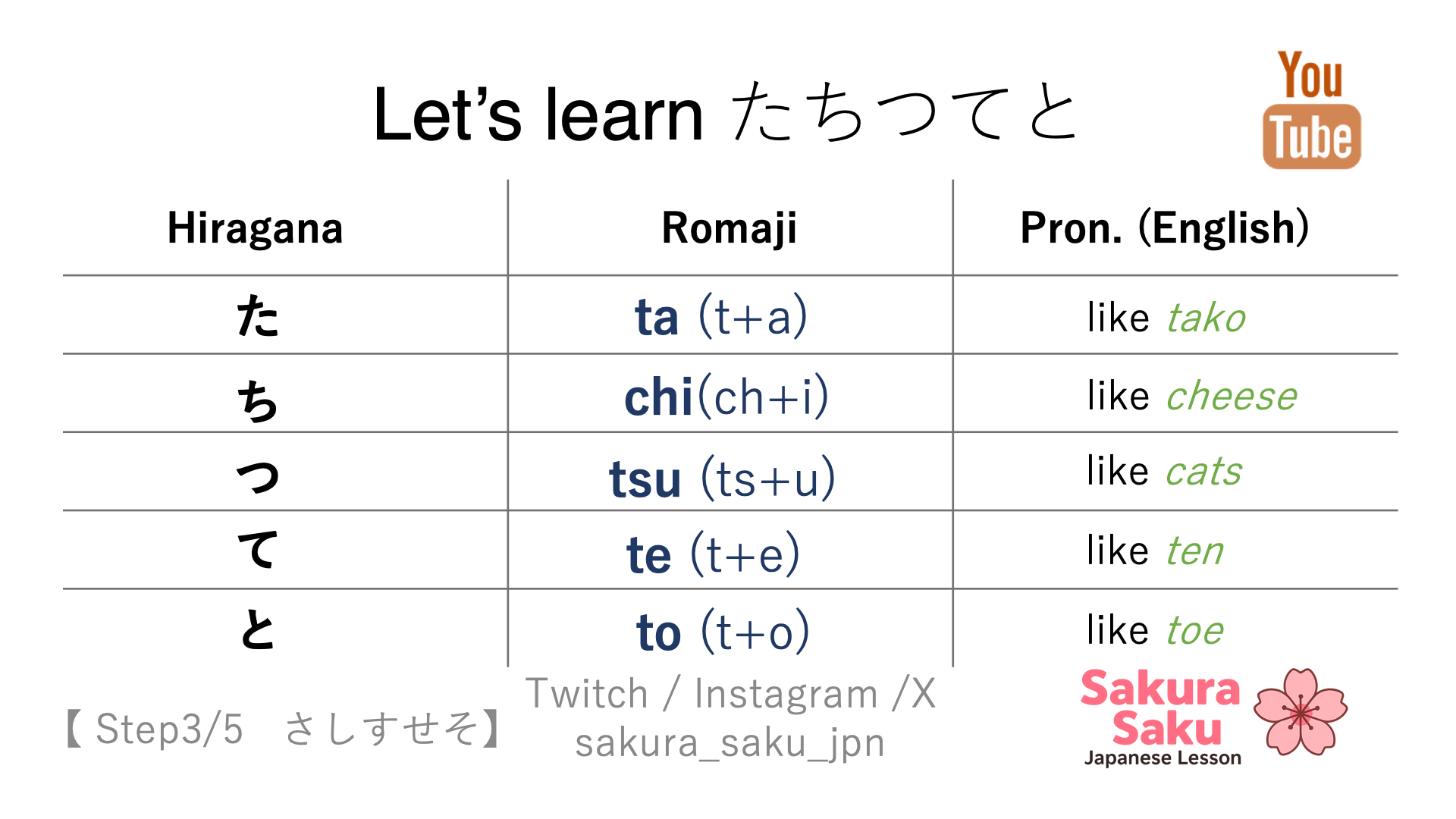
This group is based on the vowels あ・い・う・え・お,
combined with a t-based sound.
Some sounds change slightly:
- ・ち is pronounced chi
- ・つ is pronounced tsu
We’ll practice each sound slowly together.
た =ta
- Pronounced as “ta”
- Similar to the “ta” sound in taco
ち =chi
- A special sound in Japanese
- Not “ti”, but pronounced “chi”
- Similar to the beginning sound of cheese
つ =tsu
- One of the trickier sounds for learners
- Pronounced as “tsu”, not “su”
- The “ts” sound is similar to the ending of cats
て =te
- Pronounced as “te”
- Short and clear, like ten
と =to
- Pronounced as “to”
- Similar to the sound in toe
Practice
Try reading all the sounds slowly: た, ち, つ, て, と. Great job!
Take your time and focus on clear pronunciation.
Note for Learners
Some sounds, such as ち (chi) and つ (tsu), may feel difficult at first.
This is completely normal. We practiced these sounds together during the lesson.
📝 Words with Ta-gyo (た行)
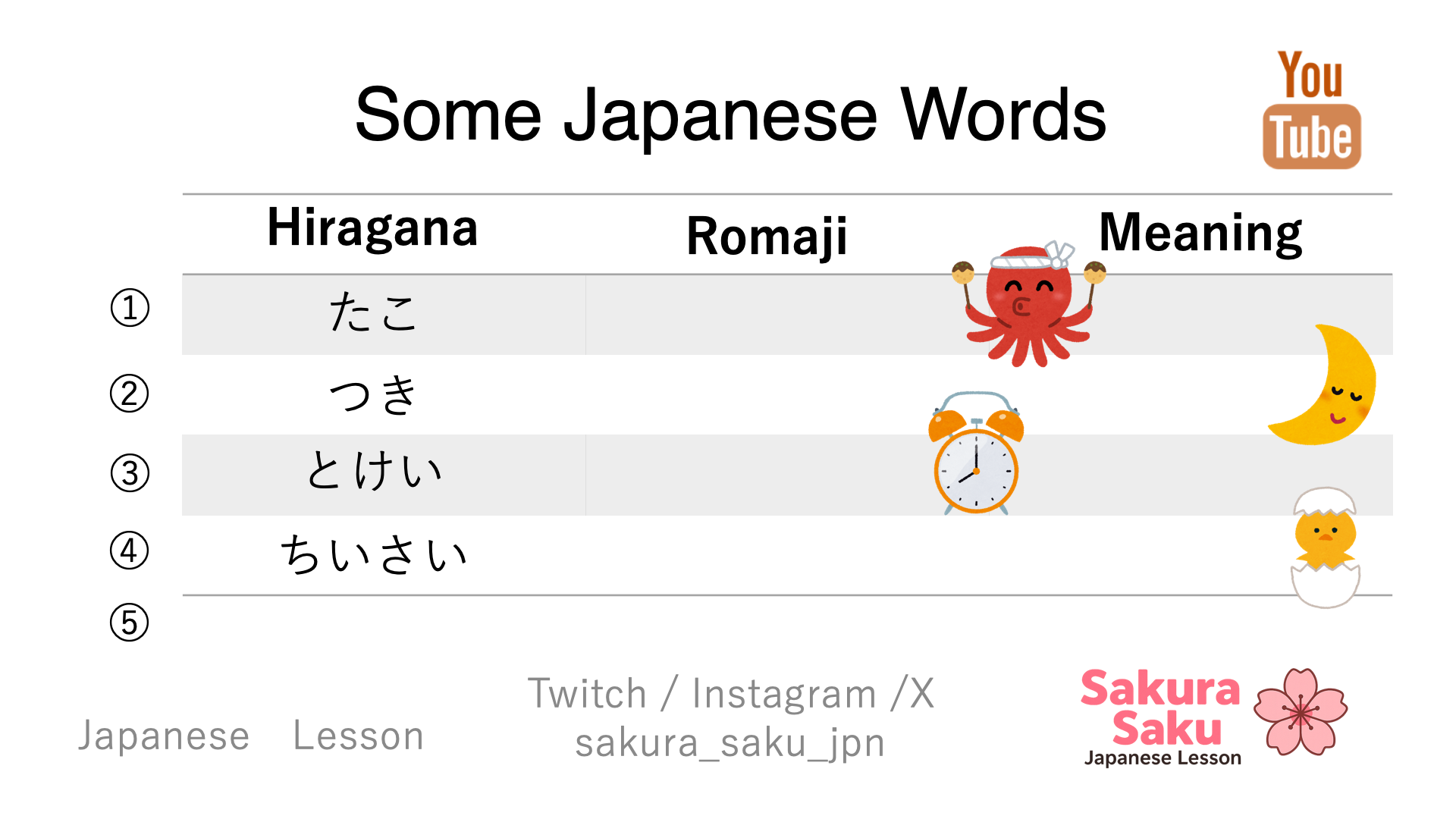
Now that we’ve practiced Ta-gyo (たちつてと), let’s learn some words using these hiragana.
You’ll see only the hiragana and small picture hints.
Try to guess how to read the words and what they mean.
✅ Let’s Check the Answers
Here are the readings:
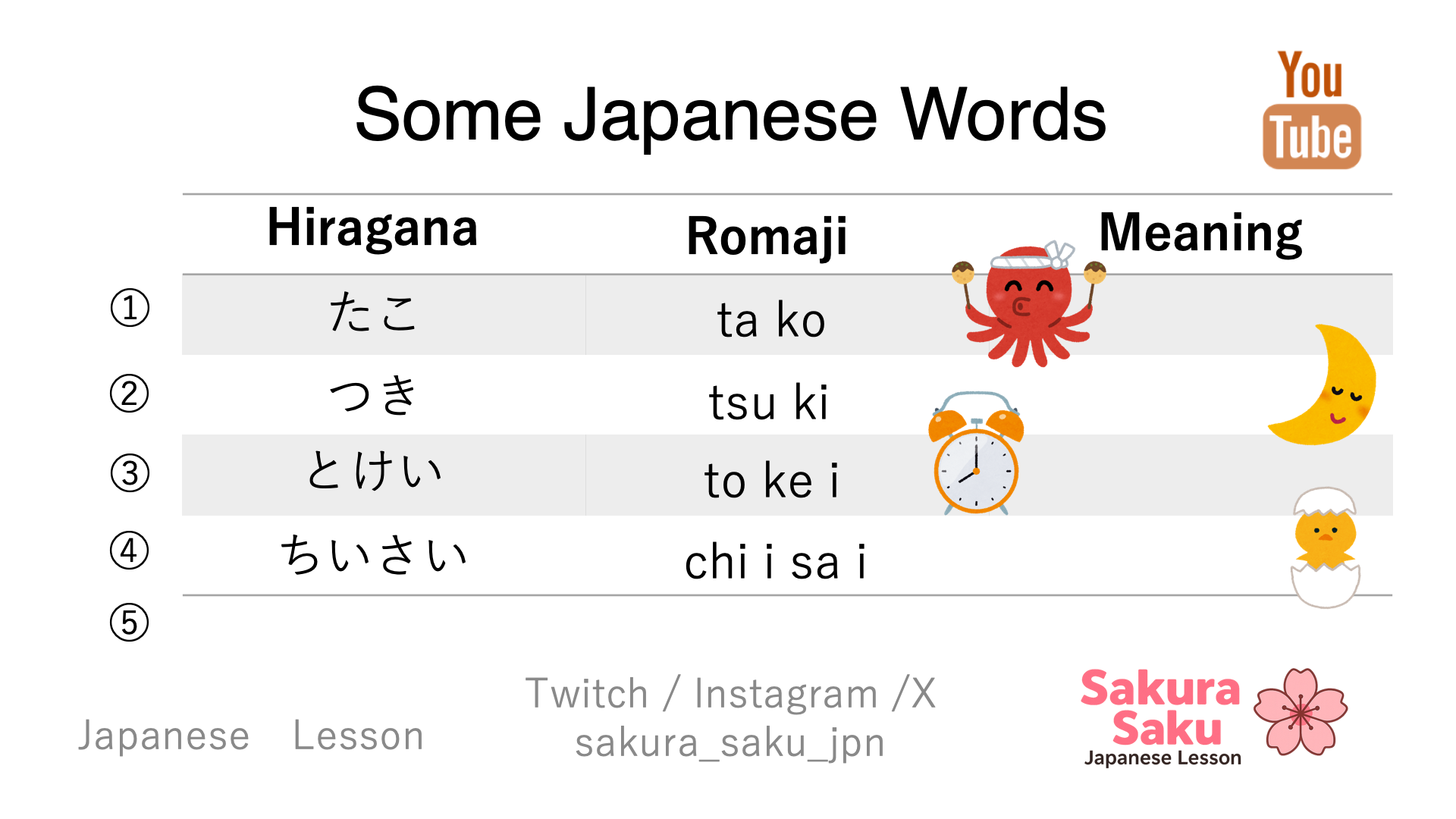
- たこ — tako
- つき — tsuki
- とけい — tokei
- ちいさい — chiisai
All of these are nouns, except ちいさい, which is an adjective.
Meanings
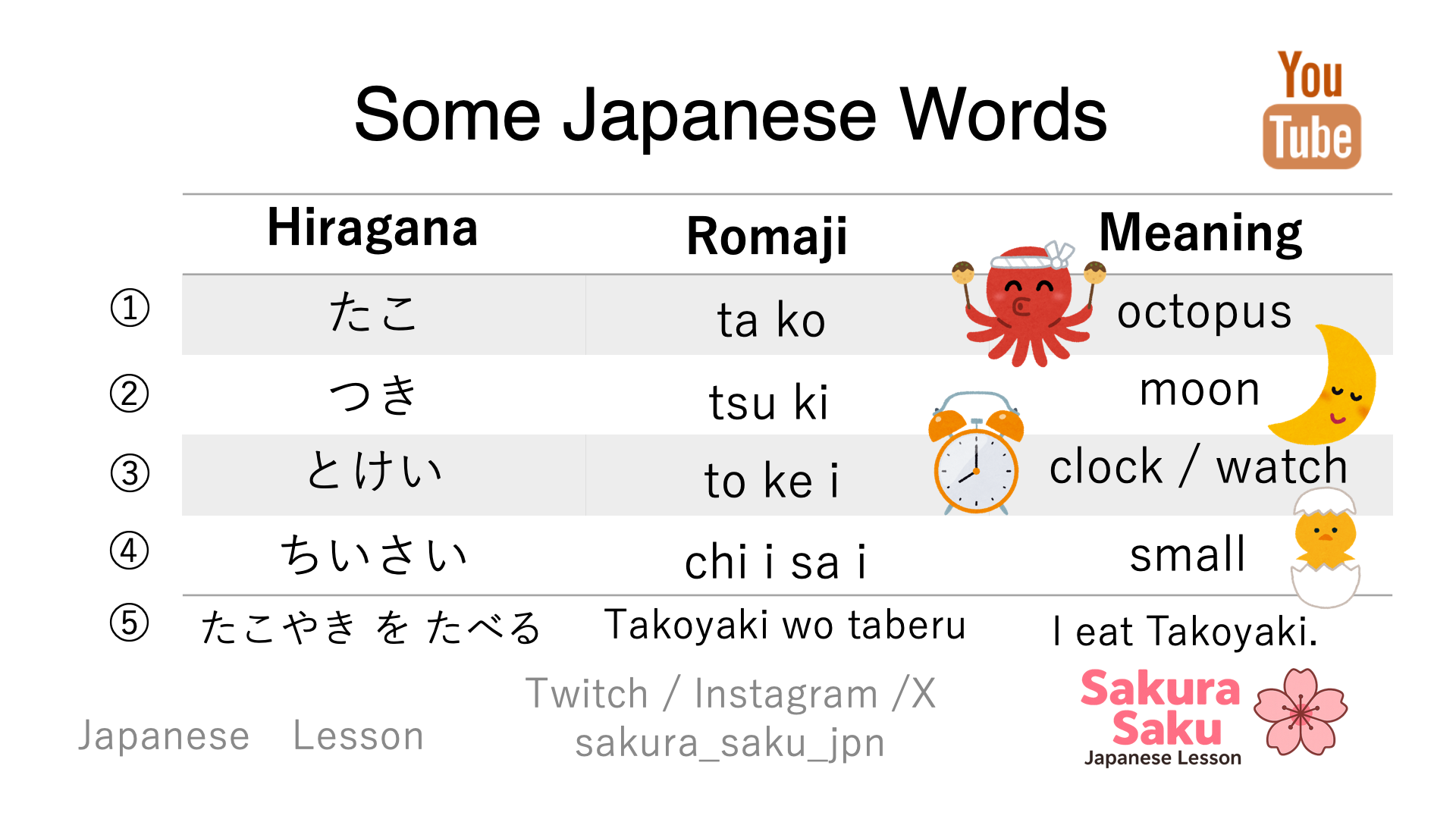
- たこ — octopus
- つき — the moon
- とけい — clock / watch
(In English, we use two words, but in Japanese, we use just one.) - ちいさい — small
The chick picture is just a hint — it’s small, so it helps you remember that ちいさい means small.
😊 Reflection
Did you guess some of them correctly?
Using picture hints can help you remember new words more easily.
⭐ Bonus Phrase
Talk About What You Eat in Japanese
Here is today’s bonus phrase:
たこ焼き を 食べる
takoyaki wo taberu — “I eat takoyaki.”
You already know 食べる (to eat), and たこ焼き is a famous Japanese street food.
For now, just enjoy saying the phrase.
Later, we’ll learn more grammar like を.
Examples
You can replace the food word:
- りんご を 食べる — ringo wo taberu — I eat apples
- パン を 食べる — pan wo taberu — I eat bread
- ラーメン を 食べる — ramen wo taberu — I eat ramen
Just replace the food word, and you can make many sentences!
Great job today! Keep practicing, and soon you’ll be able to read and write even more Japanese words.
📘 Next Lesson:
Learn how to write たちつてと in Part 2.
📱Follow Me on SNS!
To stay updated on my lessons, follow me on:
Instagram&X – where I post useful Japanese phrases, culture tips, and short lesson previews.
TikTok↓ @sakura_saku_jpn

Instagram↓ @sakura_saku_jpn

X↓ @sakura_saku_jpn

I also upload full lesson videos to YouTube, so you can watch or review anytime.
And don’t worry — chat names won’t appear in the videos. Your privacy is important.
youtube.com/@sakura_saku.lesson

I’m truly grateful for your time and support.
Your interest in Japanese means so much to me.
Let’s keep learning together!